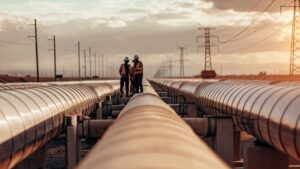

From predictive maintenance to smart grid optimization — AI is reshaping how the global energy industry operates, enabling higher efficiency, sustainability, and reliability.
By the end of 2025, the integration of Artificial Intelligence (AI) into the energy sector has become a cornerstone of digital transformation.
What was once a technological add-on has evolved into a strategic driver of operational excellence, sustainability, and competitive advantage.
Where AI Makes the Difference
Predictive Maintenance and Asset Reliability
AI-driven predictive systems analyze sensor data — vibration, temperature, and performance parameters — to forecast failures before they occur.
This proactive approach reduces downtime, lowers costs, and enhances plant reliability.
In complex industrial environments — from gas turbines to wind farms — AI ensures greater operational safety and uptime.
Energy Production Optimization
AI enables smarter integration of renewable sources into national grids.
Through advanced forecasting and real-time data processing, intelligent systems predict solar and wind fluctuations and adjust energy dispatch accordingly.
This not only balances demand and supply but also accelerates the clean energy transition.
AI in Procurement and Supply Chain Management
In global EPC and engineering projects, AI is optimizing procurement, logistics, and supply chain planning.
Algorithms identify bottlenecks, predict material needs, and streamline delivery schedules — improving coordination across complex, multi-country operations.
Digital Twin and Simulation Models
Digital twins — virtual replicas of real plants — leverage AI to simulate scenarios, predict stress conditions, and test upgrades without disrupting production.
This technology supports data-driven decisions, minimizes risk, and boosts project efficiency.
Challenges Ahead
Despite its benefits, AI adoption still faces key barriers:
-
Data quality and infrastructure: Predictive systems depend on reliable, well-structured data, often limited by outdated sensor networks.
-
Energy consumption: AI processing requires high computing power; ensuring low-carbon data centers is crucial to maintaining sustainability goals.
-
Human skills and cultural shift: AI enhances people — it doesn’t replace them. Skilled operators and engineers remain essential to interpret complex data and make informed decisions.
-
Transparency and algorithmic trust: In critical energy systems, explainable and auditable AI models are essential for safety and regulatory compliance.
What to Expect in 2026
The year 2026 marks a turning point for AI in energy. Emerging trends include:
-
Hybrid “Human + AI” decision frameworks improving reliability and performance.
-
Expanded use of digital twins and IoT-driven monitoring for continuous optimization.
-
Greater automation in grid and microgrid management to balance real-time demand.
-
AI-powered logistics and procurement for global EPC and construction projects.
-
Growing focus on green computing and energy-efficient AI models.
For Taiyo Holding, this evolution reinforces its integrated mission — combining engineering, EPC, inspection, O&M, and training with advanced digital solutions.
The result: smarter projects, safer operations, and a more sustainable future for the global energy industry.
Conclusion
Artificial Intelligence is no longer optional — it’s the engine of the energy transition.
By merging human expertise with advanced analytics, the industry can unlock unprecedented levels of efficiency, resilience, and environmental performance.
In 2026, AI will move from innovation to standard practice — and companies ready to embrace it will define the next era of energy excellence.
Sources: