
The year 2025 marked a decisive turning point in the global race toward sustainable energy. Final data from 2024 confirmed unprecedented progress: more than 585 GW of new renewable capacity were added to the global grid, representing a 15.1% annual increase and bringing total installed renewable power to 4,448 GW.
This achievement goes beyond statistics — it signifies a structural transformation. Renewable energy is no longer an alternative, but the backbone of modern industry. Solar and wind technologies remain the main growth drivers, followed by hydropower, biomass, and a growing investment wave in geothermal and energy storage solutions.
A Changing Global Landscape: Growth, Investment, and Leadership
Regional analysis shows that Asia accounted for more than two-thirds of all new renewable installations worldwide. China remains the global leader, followed by India, the United States, Brazil, and the European Union.
Africa and the Middle East are also emerging as active players, developing large-scale solar and wind projects that are reshaping regional energy independence.
Europe, meanwhile, has strengthened its commitment to industrial decarbonization and grid integration. Utility-scale projects have expanded rapidly in Italy, Germany, and Spain, while commercial and residential rooftop installations have exceeded expectations, contributing significantly to emissions reduction.
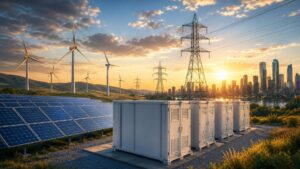
2025 also marked the consolidation of the distributed energy model: a network of interconnected micro and mini-installations supported by smart grids and battery storage. This decentralized system has improved flexibility, resilience, and security, reducing dependence on fossil fuels and enhancing grid stability.
Industrial Transformation and the Power of Integrated Services
The renewable energy boom is not only reshaping energy production — it is redefining the entire industrial services ecosystem.
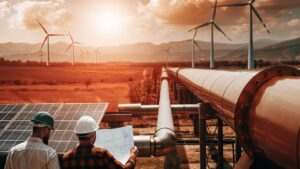
Integration has become the key to competitiveness: uniting engineering, EPC, commissioning, inspection, O&M, procurement, and training into one seamless operational process.
For international groups such as Taiyo Holding, this evolution validates a multidisciplinary approach that covers every phase of the project lifecycle — from feasibility and design to construction and maintenance.
This ensures efficiency, safety, and measurable sustainability while minimizing downtime and cost.
In 2025, the growing complexity of energy infrastructure demanded strong coordination between technical, operational, and digital expertise. Highly skilled teams supported by predictive diagnostics and remote monitoring systems became essential for ensuring reliability and high performance.
Taiyo Holding stands out in this landscape, leveraging global reach and local presence to deliver 24/7 technical support across Europe, Africa, and the Middle East — combining engineering precision with operational excellence.
O&M, Digitalization, and Sustainability: The New Pillars of Performance
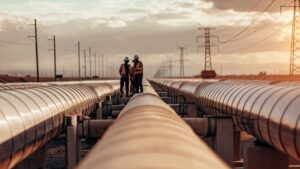
Operation & Maintenance (O&M) services have become a cornerstone of the global energy transition. Once considered a secondary activity, maintenance is now a strategic function that ensures reliability, extends asset life, and enhances efficiency.
Digital technologies — such as IoT sensors, cloud analytics, and digital twins — allow operators to predict failures, monitor performance in real time, and execute targeted interventions.
This data-driven approach has helped leading companies increase productivity by up to 20% and reduce energy consumption by nearly 15%.
The rise of digitalization has also reinforced alignment with ESG (Environmental, Social, and Governance) principles. Operational efficiency and transparency are now key indicators of long-term corporate sustainability, influencing both investor confidence and market positioning.
Looking Ahead: What to Expect in 2026
Forecasts for 2026 suggest continued expansion, with an additional 620 GW of renewable capacity expected to come online — bringing the global total above 5,070 GW.
The International Energy Agency (IEA) projects a total increase of over 4,600 GW between 2025 and 2030, representing more than half of the world’s total installed electricity capacity.
However, the challenge ahead is not just growth — it is integration. The main priorities for 2026 will be:
-
Developing hybrid systems combining solar, wind, and storage solutions;
-
Strengthening supply chain resilience and component traceability;
-
Implementing stable policy frameworks to attract long-term investment;
-
Promoting technical education and workforce development to support industrial competitiveness.
For Taiyo Holding, these global shifts represent an opportunity to reinforce its role as a trusted partner in the renewable energy sector.
By combining engineering expertise, technological innovation, and international reach, the Group continues to deliver high-value, integrated solutions designed for efficiency and sustainability.
Conclusion
The year 2025 has proven that the energy transition is no longer a goal — it is a fact. Renewable energy has moved from the margins to the center of global industrial strategy, driving both environmental and economic progress.
As we enter 2026, the focus will shift from expansion to consolidation. Companies that successfully integrate innovation, digitalization, and sustainability into their core operations — as Taiyo Holding does — will shape the next phase of the global energy transition.
Energy is no longer just a resource; it is a commitment to the planet and future generations.
Sources
- International Renewable Energy Agency (IRENA) – Renewable Capacity Statistics 2025
https://www.irena.org/Publications/2025/Mar/Renewable-capacity-statistics-2025 - International Energy Agency (IEA) – Renewables 2025 Global Outlook
https://www.iea.org/reports/renewables-2025