
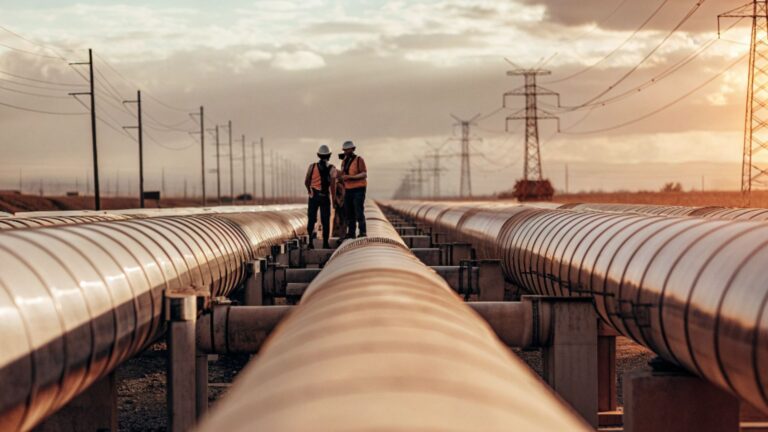
In 2025 the energy sector witnessed a decisive acceleration toward low-emission solutions, with hydrogen taking center stage. Considered the “bridge” between decarbonization and energy security, hydrogen became one of the most promising technologies to combine sustainability, efficiency, and industrial innovation.
2025 for hydrogen: record growth and new national strategies
According to recent global reports, low-emissions hydrogen projects have surged: more than 200 committed investments (with Final Investment Decision, FID) now exist worldwide, compared to only a handful just a few years ago.
This growth was driven mainly by ambitious policy frameworks, favorable financing, and growing demand across sectors such as chemicals, refining, and heavy industry — pointing to hydrogen’s expanding role beyond niche applications.
In 2025, low-emissions hydrogen supply (green or low-carbon) reportedly rose significantly, an encouraging sign given that only 0.8 Mt of renewable/low-carbon hydrogen was registered in 2024.
Moreover, the clean-hydrogen pipeline for 2030 remains large: projects committed as of 2025 could deliver several million tonnes per year if fully realized.
Technologies and industrial applications
Two main pathways have solidified: green hydrogen (via electrolysis using renewables) and low-carbon hydrogen (e.g. blue hydrogen with carbon capture). These are gaining traction in strategic sectors:
-
Heavy industry, such as steel and chemicals, where hydrogen can replace fossil fuels in high-temperature processes.
-
Mobility and transport, including shipping and heavy logistics, which increasingly rely on hydrogen-based fuels or hydrogen-fuelled engines.
-
Energy storage and grid balancing, where hydrogen allows decoupling production from demand, supporting renewables’ intermittency and enabling long-term storage.
Despite progress, economic competitiveness remains a key barrier. Production costs for green hydrogen in 2025 — according to techno-economic assessments — are still higher than conventional fuels, but decreasing costs of electrolysers and renewable electricity suggest significant reductions toward 2030.
Challenges and barriers
The hydrogen transition still faces critical hurdles:
-
Infrastructure gaps — transport, storage and distribution networks remain underdeveloped globally.
-
Regulatory and market uncertainty — inconsistent standards, unclear policy frameworks, and lack of long-term offtake contracts hamper investments.
-
Scaling issues and demand — while hydrogen supply projects multiply, actual demand and off-take commitments lag behind, making many projects economically fragile.
These obstacles highlight why low-emissions hydrogen still accounts for a small fraction of total hydrogen production globally — less than 1% as of 2024.
Role of innovation and industrial partnerships
Advancing hydrogen at scale requires more than technology — it requires integrated value-chain capabilities: engineering, procurement, construction, operation & maintenance, inspection, and training. That’s where a multidisciplinary partner like Taiyo Holding becomes crucial, offering turnkey services that combine technical expertise with operational reliability.
Partnerships between public institutions, industry players, and energy companies are also essential to build the ecosystems (from production to distribution) needed for hydrogen to become a mainstream energy vector.
What to expect in 2026
Looking ahead, 2026 is expected to be a pivotal year:
-
Dozens of new green-hydrogen facilities may reach operation, with a potential increase in global low-emissions hydrogen production by multiple million tonnes annually.
-
Cost curves for electrolysis and renewable electricity could drop hydrogen prices notably, improving competitiveness against fossil-based alternatives.
-
A consolidation phase where many announced projects may be canceled or postponed — only those with strong industrial backing, offtake agreements and integrated strategies may survive.
For Taiyo Holding, hydrogen isn’t just an energy vector — it’s a global-scale opportunity to drive industrial transformation, sustainability, and value-added services across all project phases.
Sources: