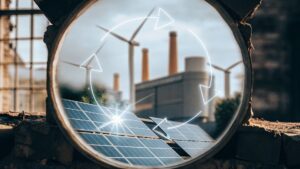

Solar-PV installations are set to lead global renewable growth through 2025–2030 — and reshape engineering, EPC, and industrial services worldwide.
The solar-power industry is entering a new phase of maturity and scale. According to recent global forecasts, renewable electricity capacity is set to increase by nearly 4,600 GW between 2025 and 2030, with solar photovoltaic accounting for the majority of this expansion. This unprecedented acceleration positions solar power as the primary engine of industrial growth in the global energy transition.
For companies providing engineering, EPC, and operational services, this evolution is rewriting priorities. The surge in new solar installations is driving demand for feasibility studies, detailed design, procurement coordination, and commissioning activities — all executed under tighter schedules and higher performance standards. At the same time, the need for quality inspection, logistics optimization, and on-site fabrication has never been greater.
Recent market analyses confirm this upward trend. Projections for 2025 indicate that global solar PV installations will exceed 650 GW, with a strong contribution from both utility-scale plants and distributed systems. Commercial and industrial rooftop projects are expanding rapidly, accounting for a growing share of total capacity. This diversification of installation models requires flexible, multidisciplinary partners capable of adapting their engineering and project management expertise to a variety of contexts and regulatory frameworks.
In parallel, the sector is shifting from traditional procurement models to competitive auctions and cost-efficiency contracts, where success depends on integrated execution and optimized supply chains. Companies that manage the full cycle — from engineering and material supply to inspection, testing, and O&M — are better positioned to deliver value and maintain control over timing, safety, and sustainability.
For Taiyo Holding, the solar growth trend underlines the importance of its integrated approach. With capabilities spanning engineering, EPC, inspection, operation, and training, the Group supports energy clients in achieving efficient, reliable, and environmentally responsible results.
Ultimately, solar power growth in 2025 is more than a numerical milestone. It reflects the convergence of innovation, collaboration, and technical precision that defines the future of industrial energy. Organizations that embrace this evolution — combining expertise with adaptability — will lead the next chapter of global sustainability.
Data source: International Energy Agency (IEA) – Renewables 2025 Global Report